How Lindy runs its entire marketing site
with Claude and Sherpa


Lindy's story
Coming soonLindy is building an AI coworker you can talk to over iMessage, Slack or wherever you already work. It pulls reports, runs ads, and on the day we talked to Ryan, Lindy’s head of marketing, it even booked the team’s lunch. The company has raised $50 million from Menlo Ventures, Coatue and Battery Ventures.
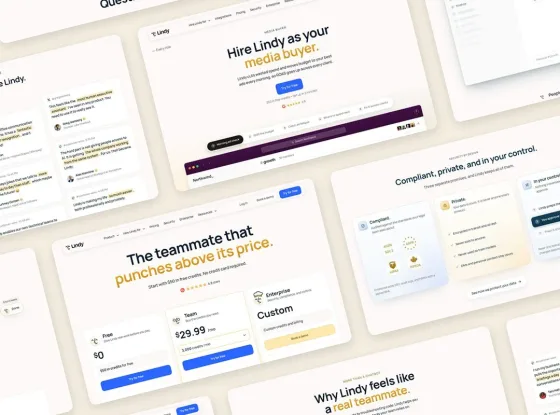
Ryan calls Lindy’s website “the core of our messaging and our story,” and it’s a large one, with over 2,000 pages. Moving it off Webflow took one conversation with the Sherpa team. Everything came over in under 24 hours, including pages, scripts, forms, CMS collections and SEO metadata. The Lindy team then spent around an hour double-checking key analytics events and page flows, and they were ready to go live.
Usually you have to pick between a site builder that’s easy but locks you in and custom code that’s yours but needs engineers. Lindy got both. The site is now custom Astro code Lindy owns, and Sherpa hosts it, maintains it and gives the team everything they need to run it from Claude.
Work that used to bounce between a designer and a Webflow developer for two weeks now sometimes takes minutes. Everyone on the team, including people in marketing and sales, can update the site themselves from Claude while staying within Lindy’s design system. They launch pages and A/B tests as fast as they can ask Claude for them.
 50 pages

What running a website from Claude actually looks like
Anytime Lindy’s team would have pinged a web developer or a designer, they open Claude which is connected to Sherpa. As Ryan puts it, you talk to it “in natural language, you tell it what you want, it shows you what it did, and if you don’t like it, you can just give it feedback.”
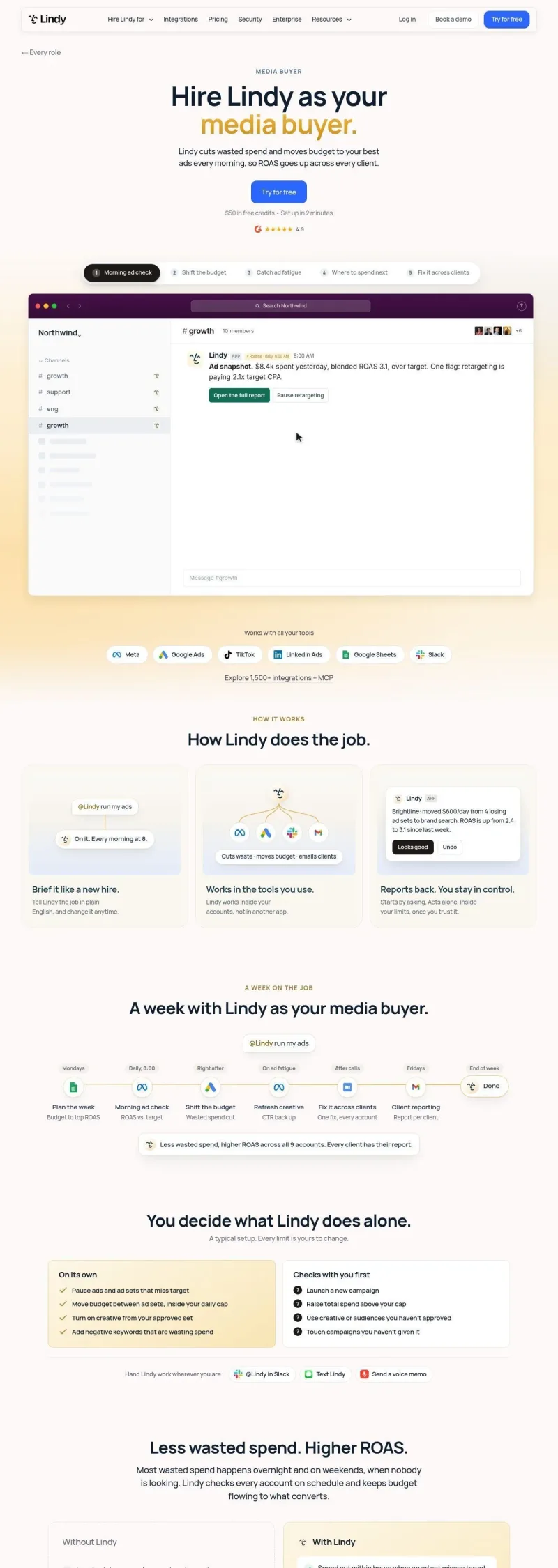
Ryan wanted a page for each of Lindy’s 50 use cases. He started by asking Claude to design one page, then shared the Sherpa preview in Slack. The designer and the rest of the team left comments right on the page with the Sherpa annotation tool. Ryan pasted the link back into Claude, and Claude made the fixes. Once everyone was happy with the first page, he locked it in as the template, pasted in the other 49 use cases and published them all through Sherpa in one click. As Ryan puts it, “we went from planning to publication in the same day.”
One of Lindy’s CMS collections had 1,500 logos that needed to be sharper. One prompt to Claude found higher-resolution versions of all of them and swapped them in, and the live site and the CMS behind it were updated in about 10 minutes.
Smaller changes are even faster. When Flo, Lindy’s CEO, spotted an alignment issue on the pricing page, Ryan pasted the link into Sherpa, and a few minutes later the fix was live.
More people on the team contribute to the website now too. Lindy on the sales team, Haneen in growth marketing and Batoor in ops are often making changes themselves. Ryan says they “just have an idea, and they go and they build it.” None of them need to know how the site is built or how to use a specific tool. There is comfort in knowing nothing can go live until someone with publishing permission reviews the preview and hits publish.

“I rebuilt our case studies and built customer enablement pages while multitasking other projects, in under an hour!”
Sherpa makes sure whatever they ask for follows the way Lindy’s site is supposed to be built. For example, it uses the existing components and design system, matches the structure of each CMS collection, and follows best practices for accessibility, SEO, page speed and more, all on its own.
How Lindy runs A/B tests now
On Webflow, a test meant weeks of design cycles and Webflow development, plus a separate testing tool on top. Lindy tried a few, including VWO and Optimizely, and never found one they liked. Now tests can be launched in one prompt.
Ryan asks Claude for the change he wants to try. Instead of publishing it, he tells Claude to launch it as an A/B test, and Sherpa splits the traffic and measures the results. Sherpa serves each variant at the edge, so visitors never see the flicker that most A/B testing tools create. Simple tests have gone from idea to live in a single prompt, and the team often talks about an idea in a meeting and has it running a couple of hours later.
Lindy usually has four or five experiments running now, each with two or three variants. “Headline and messaging tests have become so easy, we don’t even really think about it anymore. The thing that’s really changed, aside from the velocity, is the complexity of the experiments.” Pricing tests used to need Lindy’s engineers and the Webflow developer, and took weeks. Now Ryan gets them live himself in under a day.
One of the team’s most notable tests removed the signup paywall. New visitors could start with free credits and no credit card. The result was a 250% lift in people completing onboarding, which Ryan calls “one of the biggest unlocks we’ve had after running hundreds of tests.”
Reading the results is just as easy. In Sherpa, a dashboard shows how each test is moving key metrics like signups and onboarding, and it can pull in whatever events the team already tracks in tools like PostHog or GA4. When Ryan wants to go deeper, he asks Claude.
Sherpa’s analytics track what visitors actually do on each variant, so he can ask what people are interacting with most, or how visitors from different sources behave on each version. He’s even built a few custom skills that turn any experiment into a detailed report with a single command.
Site performance and SEO
“Page speed is one of those things that, at least in the growth marketing and web dev world, people always talk about, because it’s always so hard to optimize,” Ryan says. “We all know it’s so helpful for SEO or for ads, because no one wants to wait for your website to load.”
It was also something the Lindy team had struggled with for a long time. They spent thousands of dollars and hundreds of hours of their Webflow developer’s time on it, and even hired web performance specialists. All of that got mobile Lighthouse from around 30 to around 50, and it couldn’t go higher because of limitations from Webflow.
When Lindy moved to Sherpa, because the site is built on Astro and Sherpa optimizes the site for you, the mobile Lighthouse score jumped past 90 overnight. Ryan calls it “the biggest single gain that we made, with almost no effort on our part.”
SEO was one of Lindy’s biggest concerns going into the migration, and it turned into one of the biggest wins. The Sherpa team and its migration tools carried every page and piece of metadata over one-to-one. One month after the migration, every core SEO metric was the same, if not better, and some collections were getting 50% more organic traffic. SEO work moves faster now too. Instead of editing pages one at a time, the team can ask Claude to improve accessibility and metadata across hundreds of pages at once, or spin up new pages built for search.